



A client came to us last year who had married a Colombian woman. They were living together in Medellín, and she had a U.S. Investment account that had grown considerably. When he asked his previous accountant about the tax implications, the answer was a confused shrug. But that shrug was costing him thousands, and he didn’t realize it.
What people don’t realize is that foreigners who invest in U.S. Stocks do not owe capital gains taxes on those investments. Whether they sell within a year or hold for five, they owe nothing. If you are someone who has found love abroad (or you know someone who has), this single rule may change your financial strategy.
In this guide, we will walk through exactly how this works, the steps to set it up correctly, and the traps that can turn a powerful approach into an expensive mistake.
What Is a “Passport Bro” and Why Does It Matter for Taxes?
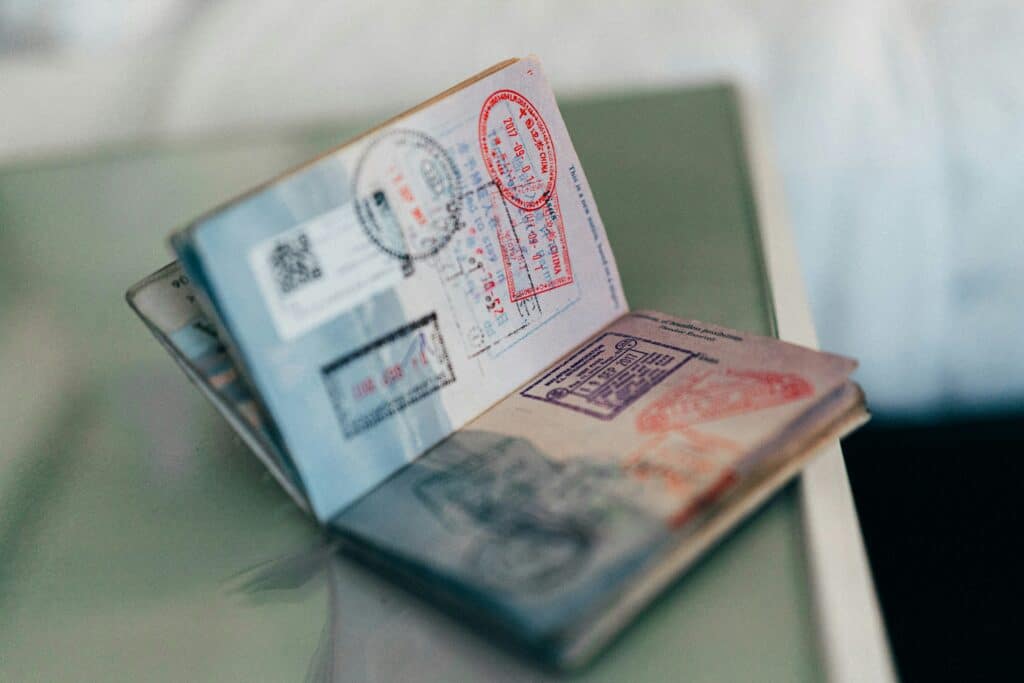
A passport bro is someone who uses their passport to go abroad to find love, among other things. Typically, this is guys seeking relationships with foreign women, though it works both ways. The popular destinations are places like Colombia, Brazil, Mexico, Thailand, Vietnam, and Bali. Basically, South and Central America plus Southeast Asia.
The internet has many opinions about this. But we’re looking at the financial, not people’s opinions here. We are not here to debate lifestyle choices. We are here to talk about what happens after the love story works out. You found someone, you got married, everything is going great on the personal side, so now let’s get your taxes set up.
All that said, the fact that your spouse is a non-U.S. Citizen creates a tax advantage that most Americans with American spouses will never have access to. Many people are unaware this advantage even exists. That lack of awareness is the difference between keeping your investment gains and handing a chunk of them to the IRS.
Step 1: Understand the Core Rule
Foreigners (non-U.S. Citizens, non-resident aliens) can set up investment accounts in the U.S., and they don’t owe capital gains taxes on their investments.
A US citizen buys Apple stock, watches it multiply, sells it, and owes capital gains tax. Short-term or long-term, the IRS wants its cut. But a foreigner doing exact same thing on the exact same platform? No capital gains tax. And this is not a loophole, it’s the actual rule.
So if your spouse or partner is a foreign national and they open a U.S. Investment account through platforms like Charles Schwab, TD Ameritrade, or even Robinhood (if they allow the account), your household just gained access to a tax-free investment vehicle that most American families can only dream about.
But there is a catch. A big one.
Step 2: Keep Your Spouse Outside the U.S. Tax Net
This is the part many people mess up. You need to live outside the U.S. because you don’t want to trigger your foreign spouse becoming a green card holder or U.S. Tax resident. The moment your spouse becomes a resident for tax purposes, this entire approach falls apart.
Why? Because U.S. Tax residents owe taxes on worldwide income. Doesn’t matter where they were born. Once the IRS considers them a resident, they are taxed like any American.
The key requirement is that your foreign spouse needs to remain a non-resident alien. That means living abroad, not spending too much time in the U.S. (look up the 183-Day Substantial Presence Test), and not obtaining a green card.
Weighing your priorities carefully is important here. For example, if you wanted to move back to the States together, this game plan likely will not work. But, if you wanted to keep living in Medellín, Bangkok, or São Paulo, you’re in business.
It is not hypothetical. It’s happening right now for real couples making real money.
Step 3: Set Up the Investment Account Correctly
Here is your action plan. Walk through these steps carefully, and if you need help doing this, feel free to call us.
- Choose a U.S. Brokerage that accepts non-resident alien accounts. Charles Schwab and TD Ameritrade are common choices. Each platform has its own requirements for documentation.
- Open the account in your foreign spouse’s name. Not yours. Not jointly. Theirs. They are the account holder and the investor.
- Fund the account with their money. Your spouse puts money into the investment account and begins investing in U.S. Stocks, ETFs, crypto, whatever platform allows.
- Let it grow, trade, and compound. Here is the powerful part – say your spouse puts $10,000 into a stock. That stock takes off, and the position grows to $100,000. If they sell, whether within a year or after several years, they won’t pay any capital gains tax on that gain.
Short-term gains? Tax-free. Long-term gains? Tax-free.
And you don’t technically have to be married to use this playbook. You just need to really trust your partner. (Marriage helps with the trust part, obviously.)
Step 4: Watch Out for the Home Country Tax Trap
1. Purpose
Now, let’s get into the tricky parts. Your spouse can avoid US capital gains tax, which is good, but what about where you actually live? You need to check that their home country does NOT tax worldwide income.
Countries like Thailand, Colombia, and Brazil are favorable here (as of the time of writing). They typically don’t tax worldwide income like the U.S. does, but details matter a lot. Take Colombia for example. If your spouse sells stocks in their U.S. Account and the cash stays in the US, you’re fine. But if they transfer those gains to a Colombian bank account, Colombia will want a cut. The workaround is to keep money in US Account and spend from this account. Don’t bring it back to a country that will tax it.
Now, look at Sweden. A friend married a Swedish woman. This strategy doesn’t work there. Sweden taxes worldwide income. The tax rules in your spouse’s home country can make or break your plan.
Pro tip: Before you move forward, find out if your spouse’s country of residence or citizenship taxes worldwide income. If they do, the capital gains benefits on the U.S. Side won’t matter. The plan falls apart.
Step 5: Plan for the Estate Tax Surprise
Most folks stop thinking at “no capital gains tax,” but there’s an estate tax issue that can catch families off guard. For non-resident aliens holding U.S. Assets, the estate tax exemption is just $60,000. Compare that to the millions U.S. Citizens enjoy. What’s the real impact? If your foreign spouse has over $60,000 in U.S. Investment assets and passes away, the estate tax on anything above that threshold can reach 30% to 40%. That is potentially a LOT of money.
The good news is that there are ways to avoid this. One option is to hold the investment account in a business structure like a C-corp instead of in your spouse’s personal name. This increases complexity and cost, but it can protect the assets from that heavy estate tax. So, this isn’t a DIY job. Get professional help for setup. (And yes, we assist clients with this at BizBud.)
Three Conditions That Make This Game Plan Work
For this approach to save you thousands of dollars, all three of these things need to be true at the same time:
- Your spouse is a non-resident alien who hasn’t triggered U.S. Tax residency through a green card or substantial presence.
- Their home country doesn’t tax worldwide income, or at minimum, doesn’t tax unrepatriated foreign investment gains.
- The investment gains stay in the U.S. Account and are not transferred to a bank account in a country that would tax the inflow.
In practice, miss any one of these, and the approach either partially or completely falls apart.
All three working together? That is when you see the real savings.
Common Mistakes to Avoid

Moving back to the U.S. without thinking it through. The moment your spouse becomes a U.S. Tax resident, capital gains tax applies to them just like any citizen. Plan the residency question before you open accounts.
Ignoring the home country’s tax rules. “No U.S. Capital gains tax” is only half the equation. The other half lives in whatever country you are calling home.
Transferring gains to a local bank account in a taxing jurisdiction. This is the Colombia trap mentioned above. Keep gains in the U.S. account if you are in a country that taxes incoming foreign funds.
Forgetting about estate tax planning. That $60,000 threshold is low. If your spouse’s U.S. Investments grow past that amount, and the whole point is that they should, you need a plan for what happens to those assets.
Trying to do this entirely on your own. Tax law across multiple countries isn’t a weekend Google project. One wrong assumption can cost you more than the strategy saves.
Who Is This Actually For?
This is a specific play for a very specific situation. If you’re a digital nomad or expatriate living abroad and your spouse or partner is a foreign national, and you are both comfortable living outside the US, this may be a great plan.
If it fits, this approach is powerful, but if you are planning to move back to the States next year, or your partner’s home country taxes worldwide income aggressively, you need a different approach.
Not every tool works for every situation. Pretending otherwise leads to expensive mistakes.
What to Do Next
If you are reading this and thinking, “this is literally my situation,” here is your move.
- Verify your spouse’s tax residency status. Are they a non-resident alien? Confirm it. Worth repeating. Think about it. Do not assume.
- Research their home country’s tax treatment of foreign investment income. Specifically, do they tax worldwide income? Context matters. Do they tax funds brought into the country from abroad?
- Consult with a tax professional who understands cross-border situations. This isn’t standard H&R Block territory. You need someone who works with international clients, digital nomads, and expatriate couples.
- If conditions line up, open that U.S. Investment account and start putting this advantage to work. Every year you wait is a year of potential tax-free gains you are leaving on the table.
The rule exists. The strategy works. The only question is whether you will use it.
If you want help getting this set up correctly, reach out to us at BizBud. We work with clients in exactly this situation every day. Getting the details right is what separates a smart playbook from an expensive headache.
Related Reading
- U.S. Tax Obligations for Expats: Step-by-Step Guide for Digital Nomads Living Abroad
- Why Living Abroad Doesn’t Automatically Reduce US Taxes for Digital Nomads
- FBAR and FATCA Requirements for US Digital Nomads
- US Taxes for Digital Nomads: What You Need To Know in 2026
About The Author:

Cameron Botes is the founder of BizBud, a tax and accounting firm built for content creators, influencers, digital nomads, and entrepreneurs building businesses across borders. A former professional soccer player across four continents, Cameron brings the same discipline, preparation, and pressure-tested execution from his athletic career into helping business owners plan ahead, stay compliant, and keep more control over their financial future.
Since founding BizBud in 2020, Cameron has grown the firm from a one-person practice into a team of CPAs and tax advisors serving hundreds of clients across the U.S. and around the world. With an MBA in finance and accounting, international business experience, and a team with backgrounds at firms like PwC, Deloitte, and EY, Cameron helps creators and founders simplify taxes, clean up their books, and build smarter systems so they can focus on the work they actually love.